Site update

We are rolling out a new design. Some pages have it and some do not yet, so you may notice two different looks as you browse. Everything still works.

Something look wrong? Tell us
Skip to content
Get a free quote +254 723 175 402

Service

Website design and development in Nairobi

Built to be found, and built to last.

Gemial Digital designs and builds websites for businesses in Kenya and the UK. Every site is built on Core Web Vitals, accessibility and technical SEO from the first commit rather than retrofitted afterwards, and wired into your analytics and CRM before it launches. We then keep running most of what we build, which is why the work shown on this page is still live and still ours.

8
Published projects you can open and check
100%
Of the client sites we launch, we still run
4yrs
Longest site under unbroken management

What is included

What you get, itemised.

Platform
WordPress, or a headless build where the project earns it
Performance
Core Web Vitals tuned, INP measured on real devices, WebP and critical CSS
Accessibility
WCAG-oriented markup, keyboard paths and contrast checked before launch
Search
Semantic HTML, clean URLs, schema and sitemaps at build time
Commerce
Product pages, checkout UX, Shopify, WooCommerce or headless
Integrations
CRM, payment gateways, chatbots, server-side tagging, GA4
Handover
Source, credentials, documentation and a training session

How it works

The sequence, and what lands at each step.

  1. Discover and diagnose

    1 to 2 weeks

    We audit the current site, look at who you are competing with, map how people actually move through your funnel, and agree what success will be measured against. You get a prioritised site plan and wireframes.

  2. Design and prototype

    2 to 3 weeks

    High-fidelity designs and an interactive prototype. Call-to-action placement, copy hierarchy and the core journeys are tested before a line of production code is written, because moving a button in a prototype is free.

  3. Build and integrate

    3 to 6 weeks

    Development on the agreed stack, CMS configured so your team can actually use it, accessibility checked as we go, and integrations wired for CRM, analytics and payments.

  4. Test, launch and measure

    1 to 2 weeks

    Pre-launch QA across devices, performance tuning, a launch checklist and tracking verified before go-live rather than after. You get a live site and a dashboard that already has data in it.

  5. Optimise and scale

    ongoing

    A testing roadmap, content expansion and technical maintenance. Monthly or quarterly, for teams who want the site to keep improving rather than sit still.

Proof

Four of the eight, and the register has the rest.

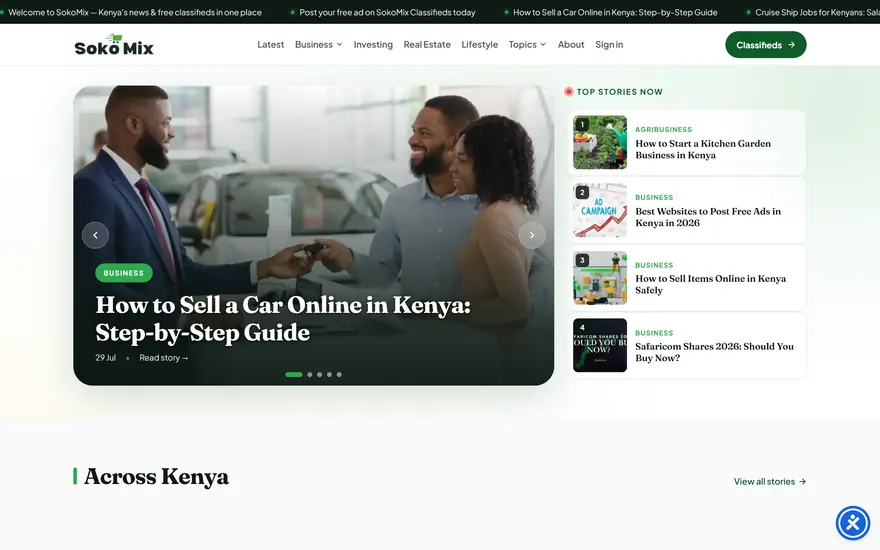
Above-the-fold view of the SokoMix website

SokoMix

sokomix.com (opens in a new tab) Our own product

A Kenyan news platform with a classifieds marketplace attached. Custom throughout: user accounts, listing submission, email verification, moderation and search. It is the most complex thing in this portfolio and the one we can show you the inside of, because we own it.
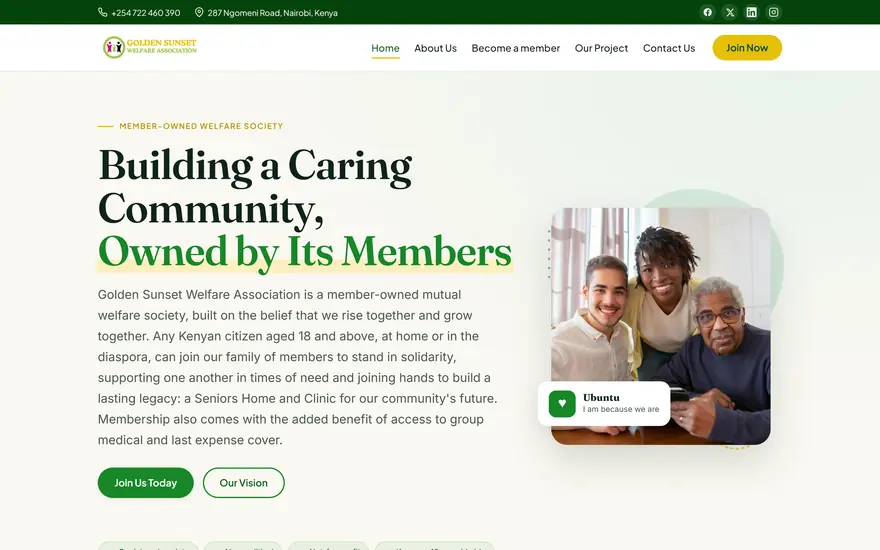
Above-the-fold view of the Golden Sunset Welfare Association website

Golden Sunset Welfare Association

goldensunsetwelfare.org (opens in a new tab)

A member-owned welfare society registered in Kenya, building membership toward a seniors home and clinic in Machakos County. A regulated sector, which meant the insurance and benefit disclosures had to be exactly right rather than approximately right. Most of the work on that site is in the precision.

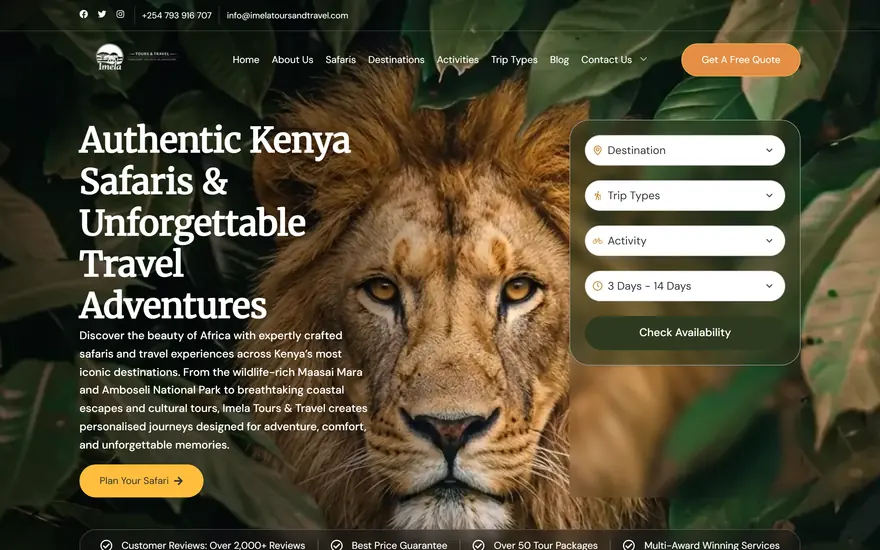
Above-the-fold view of the Imela Tours & Travel website

Imela Tours & Travel

imelatoursandtravel.com (opens in a new tab)

A Nairobi safari operator running trips across Kenya and East Africa. Built from nothing: no website, no Google listing, no social presence. Now a deep, bookable catalogue with content published continuously. One of four travel operators whose sites we run.

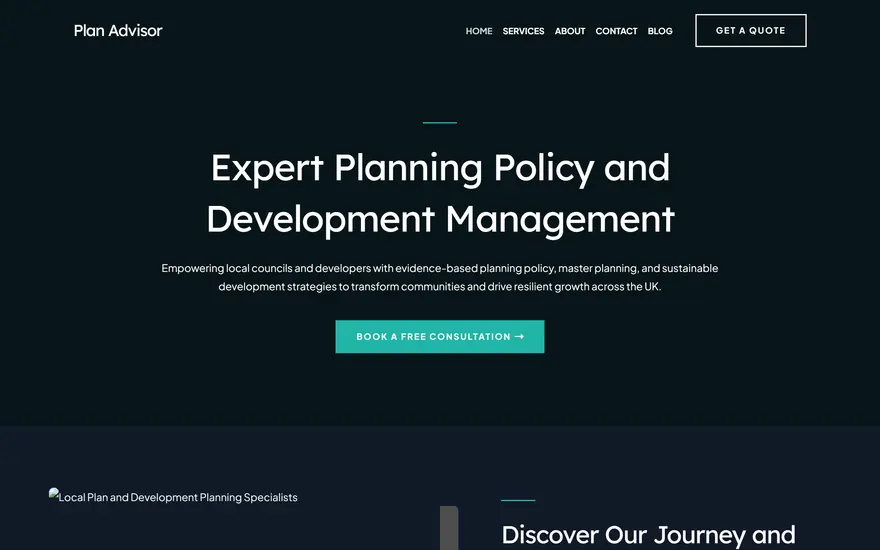
Above-the-fold view of the Plan Advisor website

Plan Advisor

planadvisor.co.uk (opens in a new tab)

UK town planning, development management and strategic policy consultancy, working with local authorities and developers. A professional services site built to turn enquiries into booked consultations, and the reason our register reads Kenya and the UK rather than Kenya alone.

This is a selection. The full register lists every project, what it does and whether it is still ours to run.

Scope

What sits underneath this service.

Website Maintenance, Security & Management

Hosting, domains, updates, backups, security, fixes and ongoing content for sites we keep running month after month.

See the work

WordPress Design & Development

Custom themes and child themes, block editor builds, and performance work on WordPress.

Custom Websites & Headless Development

Bespoke applications and features built beyond what a theme or plugin can do.

Shopify & E-commerce Design

Storefronts, product catalogues, payment integration and checkout optimisation.

UX & UI Design

Research, wireframes and interface systems ahead of a build.

Landing Page Design & CRO

High-intent pages built for campaigns, and testing to lift conversion rates.

Mobile & App Design

Web and native app interfaces, prototypes and design systems.

AI Development

AI-assisted features built into websites and mobile apps.

Vibe Coding, Engineering & DevOps

Deployments, CI and production support for sites that need an engineering hand.

Why us

Why this works differently.

  • You deal with the person who builds it

    No account manager relaying messages, and no handover to someone you have not met. The person who scopes your project is the person who writes the code.

  • The work is still ours to run

    Of the client sites we have launched, we still run 100 percent, and the longest has been under unbroken management for four years. You can open any of them, click through and judge it for yourself. That is a different thing from a case study.

  • Search is a build decision, not a phase after it

    Semantic markup, clean URL structure, schema and sitemaps go in with the first commit. Retrofitting search onto a finished site costs more and works less well, which is why most redesigns lose rankings and this approach does not.

Questions

The things people ask before they commit.

How long does a website redesign take?

Most projects run six to twelve weeks from kickoff to launch. A brochure site is quicker, e-commerce and custom integrations take longer. The single biggest variable is how fast content and approvals come back.

Will my new site be built for search?

Yes, and at build time rather than afterwards. Semantic markup, clean URLs, schema, sitemaps and a redirect map for every URL that changes. Preserving existing rankings through a redesign is part of the job, not an add-on.

What platforms do you work with?

WordPress for most projects, Shopify or WooCommerce for commerce, and headless where a project genuinely needs it. We recommend the simplest thing that meets the requirement rather than the most impressive.

Do you offer design-only or build-only?

Yes to both. Design-only delivers files and a prototype your developers can build from. Build-only takes your existing designs through to launch.

What is included in support after launch?

Updates, backups, security monitoring, uptime checks and a fixed monthly allowance for content changes. Detailed on the website management page.

Who owns the website and the code?

You do, from launch. Source, credentials, domain, hosting and design assets are all yours. There is no lock-in and nothing is held back to keep you on a retainer.

Do you optimise for Core Web Vitals?

Yes, and we measure INP on real devices rather than only in lab conditions. Performance is checked before launch, not diagnosed after a client notices the site is slow.

Can you integrate with our CRM or payment gateway?

Yes. HubSpot, Salesforce and Pipedrive on the CRM side, Stripe, M-Pesa and the main Kenyan gateways for payments, plus server-side tagging so conversion data survives browser restrictions.

How do revisions and approvals work?

Two rounds at design, one at build, on a shared link where you comment directly on the page. Anything beyond that is quoted before it starts, so there are no surprise line items.

How much does a website cost?

Every project is quoted individually, because scope drives cost far more than page count does. As a guide, brochure and business sites start from KES 150,000, e-commerce from KES 350,000, and custom or headless builds from KES 600,000. What moves a project up that range is the number of bespoke templates, whether we are integrating with a CRM or a payment gateway, how much content needs writing or migrating, and whether you want the site managed after launch. A short discovery call gets you an itemised quote with a fixed price, at no cost and with no obligation to continue.

Tell us what you need and we will price it.

A short discovery, then an itemised quote. No retainer required to start and no obligation to continue.